Why You Should Never Use Regular Soap on Your Hair — The Science of pH and Healthy Strands
Updated: Aug 12, 2025

It’s a popular internet “hack”: skip shampoo and use a regular bar of soap on your hair instead. Some claim it’s “more natural” or “better for the environment.”
What makes this topic so interesting — and heated — is that it’s one of the most controversial debates in the DIY hair care world. For years, makers have been split right down the middle:
On one side are the soap-on-hair advocates, convinced it’s the simplest, most natural choice.
On the other are formulators, hair professionals, and cosmetic chemists who point to pH science and the damage an alkaline cleanser can do to the hair and scalp.
This isn’t just a difference in opinion — it’s a fundamental difference in understanding how hair biology and chemistry work. And the science is pretty clear: soap’s pH is way too high for healthy hair.
Unfortunately, ignoring that fact can lead to dryness, breakage, irritation, and long-term scalp issues. To understand why, we need to talk about pH — and why it’s the silent hero (or villain) in your hair routine.

Understanding the pH of Your Hair and Scalp
Scalp pH: Around 4.5–5.5, slightly acidic. This acidity supports your scalp’s acid mantle, a protective film that helps keep out bacteria, balance oil production, and prevent dryness.
Hair shaft pH: Also slightly acidic. This helps keep the cuticle — the outer protective layer of the hair — lying flat and smooth.
When the cuticle is smooth and sealed, light reflects evenly, giving hair that healthy, shiny look.
pH of Shampoos vs. pH of Soap
Properly formulated shampoos — whether liquid or solid syndet bars — are pH balanced to match the natural range of the scalp and hair, usually 4.5–5.5. This maintains the acid mantle and keeps the cuticle smooth.
Soap, whether cold process, hot process, or melt & pour, is naturally alkaline — often pH 9–10 or higher. That’s perfect for cleansing skin, but it’s way out of balance for hair.
Solid Syndet Shampoo Bars vs. Soap Bars
While they might look similar, these are completely different products:
Feature | Solid Syndet Shampoo Bar | Soap Bar |
Primary Ingredients | Mild surfactants (like SCI, SLSa, cocamidopropyl betaine) | Saponified oils/fats + lye |
pH Level | Acidic (4.5–5.5) | Alkaline (9–10+) |
Hair Health Impact | Maintains acid mantle, keeps cuticle smooth | Raises cuticle, causes roughness & dryness |
Formulation Goal | Gentle cleansing, conditioning agents, scalp health | Effective skin cleansing |
Customization | Can include botanical extracts, proteins, silicone alternatives, oils, and butters for targeted hair needs | Limited to what soap can hold without losing hardness or lather |

What Happens When You Use Soap on Hair
Using an alkaline bar of soap on hair can cause immediate and long-term problems:
Cuticle Lifting – High pH causes cuticle scales to swell and lift, making hair rough, dull, and prone to tangling.
Moisture Loss – Raised cuticles let water and essential lipids escape, leading to dry, brittle hair.
Scalp Disruption – Soap strips the acid mantle, making your scalp more susceptible to dryness, itchiness, and sensitivity.
Color Fade – If your hair is dyed, the open cuticle allows pigment molecules to escape faster.
Breakage & Split Ends – Weakened cuticles eventually split, causing irreversible damage.

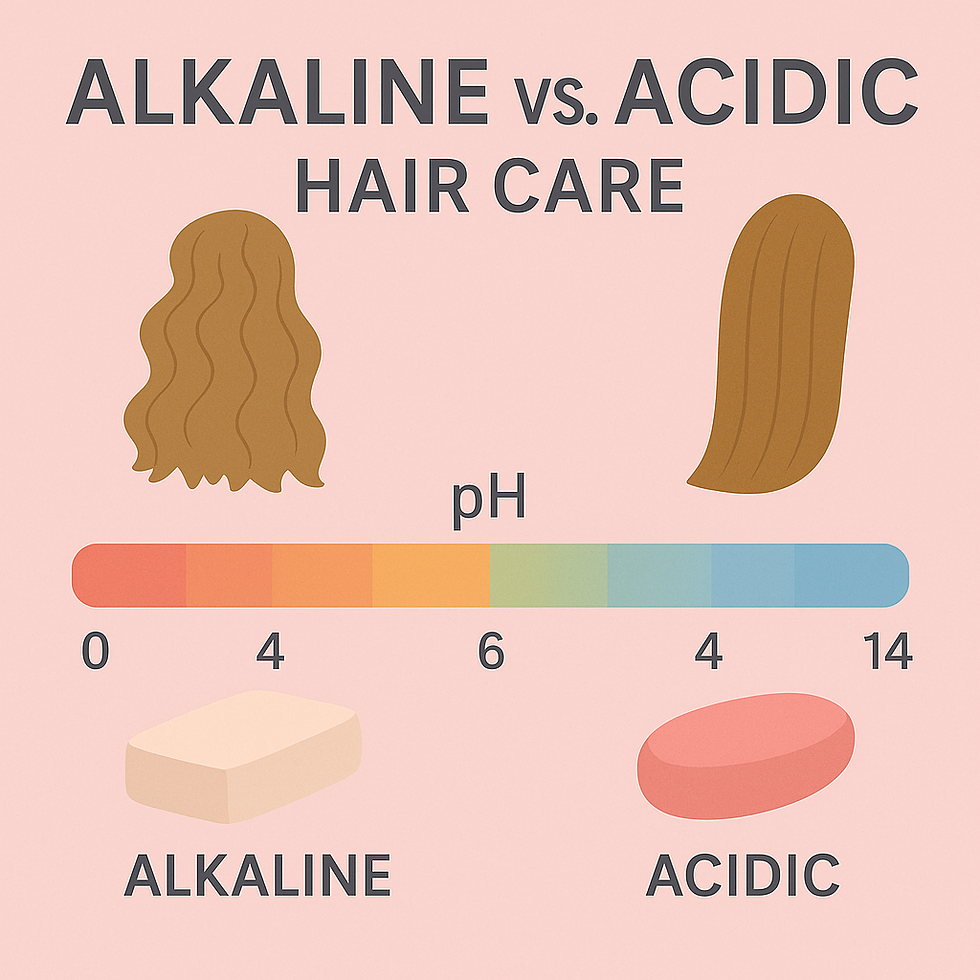
Alkaline vs. Acidic Hair Care — Why It Matters
Acidic products (pH 4.5–5.5): Keep the cuticle smooth, reduce frizz, lock in moisture, and protect color.
Alkaline products (pH 9–10): Raise the cuticle, increasing porosity, dryness, and damage risk.
Occasional alkaline treatments (like hair lightening) are fine when followed by an acidic rinse or conditioner — but using alkaline cleansers daily is a recipe for disaster.
Why an Acidic Rinse After Soap Isn’t the Answer
One of the most common counter-arguments from people who use soap on their hair is:
“It’s fine — I just follow with an apple cider vinegar rinse to balance the pH.”
While an acidic rinse (like vinegar, citric acid, or lemon juice diluted in water) can temporarily lower the pH on the hair surface, it doesn’t undo the damage that happens during the wash.
Here’s why:
Damage Happens Immediately – As soon as soap’s high pH touches your hair, the cuticle swells and lifts. Once this swelling occurs, some structural changes in the hair shaft are permanent.
Acidic Rinses Can’t Replace Lost Lipids – Raised cuticles mean essential fatty acids and internal moisture are stripped away. No vinegar rinse can put those back.
Scalp Irritation Is Not “Fixed” by Vinegar – The acid mantle on your scalp can take hours to fully recover after being stripped. An acidic rinse might adjust surface pH temporarily, but it doesn’t restore the microbiome balance instantly.
Repeated Stress Weakens Hair Over Time – Even if you close the cuticle afterward, repeated swelling and contraction from alkaline → acidic swings weakens the hair fiber like bending metal back and forth.
The truth is: if you’re using soap on your hair, you’re starting every wash by damaging the cuticle and stripping the scalp — no rinse can erase that first step.
How to Keep Hair Cuticles Smooth
Use pH Balanced Shampoos – Look for “pH balanced” on the label, especially for solid shampoo bars.
Condition After Cleansing – Conditioning agents help reseal the cuticle and add slip.
Avoid Harsh Detergents – Stick with mild surfactants and avoid products formulated for skin rather than hair.
Limit Heat Styling – Excess heat can cause cuticle lifting similar to high pH exposure.
Cold Rinse Finish – Ending with cooler water helps the cuticle lie flat for added shine.
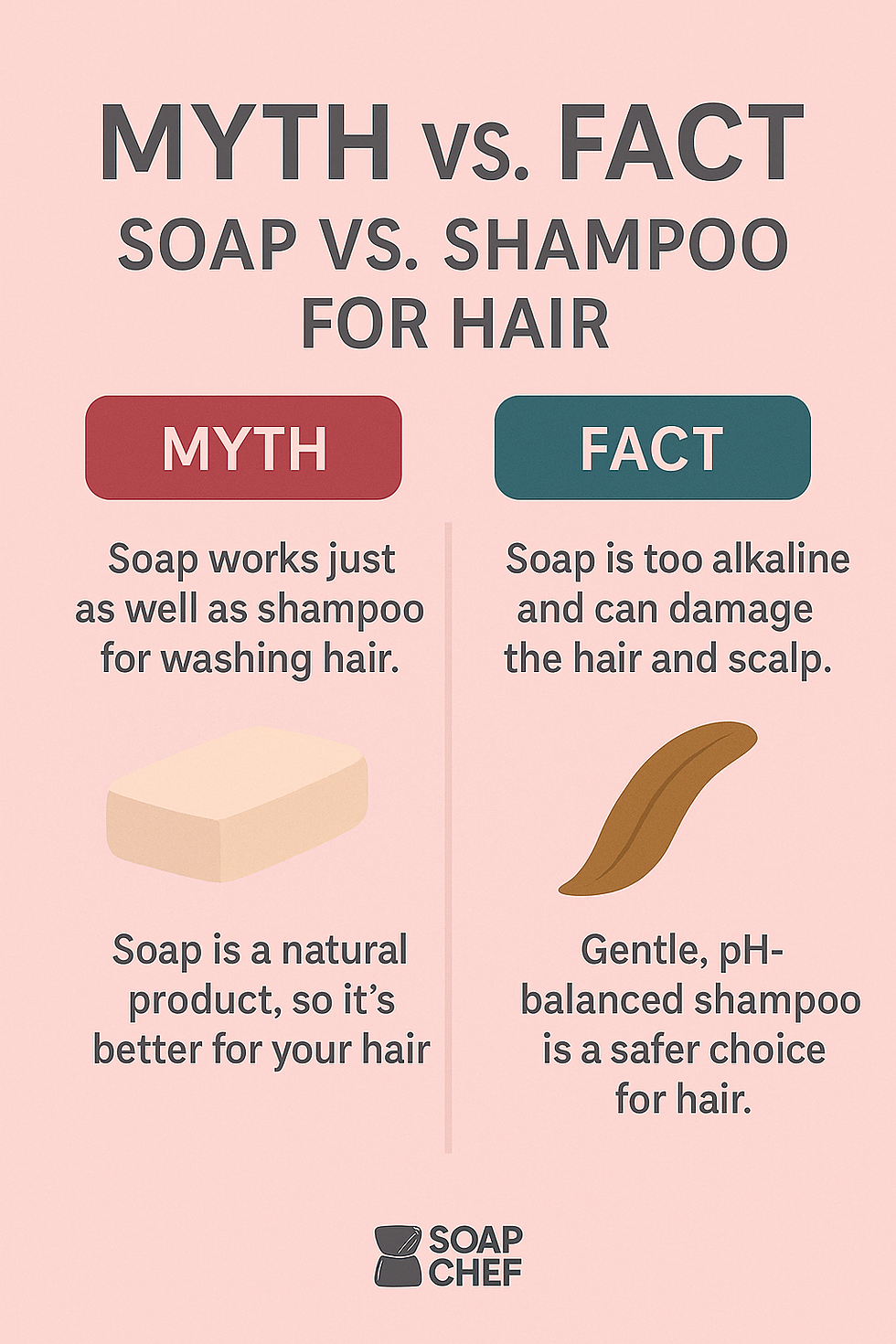
Myth vs. Fact: Soap vs. Shampoo for Hair
Myth: “Soap is natural, so it’s better for your hair than shampoo. ”Fact: Natural doesn’t always mean suitable. Soap’s high alkalinity disrupts the scalp’s acid mantle and damages the cuticle.
Myth: “You can just rinse with vinegar after using soap to fix the pH. ”Fact: Acidic rinses help close the cuticle temporarily, but they can’t undo the structural damage caused by repeated alkaline exposure.
Myth: “A bar is a bar — shampoo bars and soap bars are the same. ”Fact: Solid shampoo bars are made with gentle surfactants and are pH balanced; soap bars are made by saponifying oils and are always alkaline.
Myth: “If my hair feels clean, it must be healthy. ”Fact: Stripped hair can feel squeaky-clean because the cuticle is raised — which is actually a sign of damage, not health.
A Note on the Word “Natural” In the world of DIY formulation, natural is a feel-good word, but it’s not a scientific standard. It has no official definition, no agreed-upon boundaries, and no guarantee of safety or suitability. Arsenic is natural. Poison ivy is natural. Soap may be natural — but that doesn’t mean it’s the right choice for your hair.

The Bottom Line
Your hair isn’t just “skin on your head” — it has unique needs, and pH plays a huge role in keeping it healthy. While soap is a wonderful cleanser for the body, it’s simply too alkaline for hair. For shiny, strong, manageable locks, choose a pH balanced shampoo bar or liquid shampoo designed for your hair type — your scalp and strands will thank you.
Thanks for sticking with me to the end and keeping an open mind.
I know this topic can stir up some strong opinions in the DIY world, but science doesn’t play favorites — it just tells the truth. If today’s deep dive got you rethinking your hair care choices, then my job here is done. Your scalp and strands will thank you… and remember: Science says NO to soap on your hair!
~Lissa~



A very good read. I’m a barber since the 70’s and customers would share with me that they just use their bar of soap on their hair. It made things simple and easy. I would suggest that they didn’t but…