Tap Water vs Distilled Water vs Deionized Water in Cosmetic Formulation

If your formula “randomly” changes from batch to batch—viscosity swings, haze, weaker foam, unstable gels—water is a top suspect. Not because water is “bad,” but because different waters carry different types of impurities, and those impurities can push cosmetic systems around.

A clean way to think about water quality (and one you can defend) is to sort impurities into four buckets:
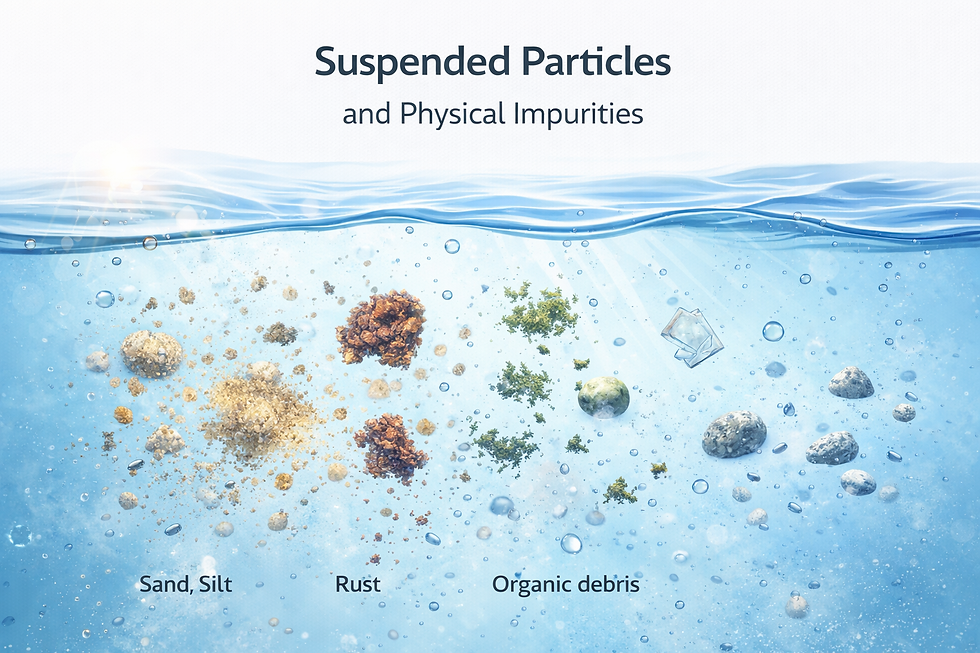
Physical stuff (suspended particles, sediment)
Inorganic ions (minerals and salts like calcium, magnesium, chloride, sulfate)
Organic compounds (uncharged organics; some volatile compounds)
Microbes (bacteria, viruses) and contamination risk (Formula Botanica)
Below is what’s factual, provable, and useful for real formulation decisions.
What each water type really is:
Tap water
Municipal water is treated to be safe to drink, and many utilities use a series of steps such as coagulation/flocculation, sedimentation, filtration, and disinfection. Source: (CDC)
Tap water is also regulated for public health compliance, and community systems must provide annual Consumer Confidence Reports (CCRs) that summarize local water quality. (EPA CCR; EPA CCR Required Info Summary (PDF))
What you can safely say: tap water can be safe to drink, but it’s not designed to be a consistent cosmetic raw material. Its composition can vary by region, season, and source, and that variability can show up as product variability.

Distilled water
Distillation boils water into steam and condenses it back into liquid. The boiling step kills most bacteria and viruses, and the process leaves many impurities behind. Source: (UMass Extension)
A university extension publication also states that, when operated properly, distillation can remove up to 99.5% of impurities, including bacteria, metals, nitrate, and dissolved solids. (University of Nebraska Extension)
What you can safely say: distilled water is typically very low in minerals/salts and is a strong default choice for formulation consistency.

Deionized (DI) water
DI water is made using ion exchange, designed to remove dissolved ions (charged minerals/salts). (Formula Botanica)
Here’s the critical nuance: DI targets ions, but it does not remove all dissolved organics, and organics can foul ion exchange resin. (Labconco water purification guide (PDF)) Also, stagnant DI cartridges can promote bacterial growth—one reason DI is often paired with other purification steps (filtration, UV, etc.) in lab-grade systems. (Labconco Water Systems PDF)
What you can safely say: DI water is excellent for removing ions, but “ion-clean” is not the same thing as “microbe-clean” or “organic-clean” unless the system includes additional controls and is well maintained.

What removes what (the categories that matter in formulation)
Inorganic ions (minerals + salts)
These are the big offenders for batch drift in many cosmetic systems.
Calcium ions (Ca²⁺): Distillation leaves minerals behind; DI removes ions by design via ion exchange. (UMass Extension; Formula Botanica)
Magnesium ions (Mg²⁺): same logic and sources as calcium.
Sulfate (SO₄²⁻) and NaCl (Na⁺ + Cl⁻): DI removes ions by design; properly operated distillation can remove dissolved solids broadly. (Formula Botanica; University of Nebraska Extension)
Bottom line: for minerals/salts, distilled and DI are both strong, but by different mechanisms.

Physical impurities (suspended particles)
Municipal treatment typically includes filtration steps, but tap water is not “particle-free” in the way lab-grade water can be. (CDC) DI itself is not a particle filter; particle removal depends on pretreatment/filtration—hence why purification is often a stacked system. (Labconco Water Systems PDF)
Bottom line: suspended solids are best handled by filtration and clean handling, not by “DI vs distilled” as a standalone debate.
Organic material (uncharged organics)
DI does not remove all dissolved organics; this is explicitly noted in the Labconco guide. (Labconco water purification guide (PDF)) Formula Botanica also separates organics as a distinct impurity class and emphasizes that different purification methods handle different classes differently. (Formula Botanica)
Bottom line: if organics matter (they often do for stability), you want stacked purification (or a reliable commercial distilled source), not “DI alone.”

Bacteria and viruses
Distillation includes boiling, and UMass Extension states boiling “kills most bacteria and viruses.” (UMass Extension) DI is not designed as a microbial control method; lab guidance warns about bacterial growth issues in stagnant DI systems. (Labconco Water Systems PDF)
Bottom line: distillation is better positioned than DI for microbial reduction at production, but none of this means your water stays microbe-free after you open and handle it.

So which one is best for cosmetic formulation?
Best default for indie formulators: Distilled water
If your goal is repeatability across emulsions, cleansers, toners, and gels, distilled is the simplest, most defensible choice: it strongly reduces minerals/salts and reduces microbes at production through boiling. (UMass Extension; University of Nebraska Extension) Formula Botanica also frames distilled as a high-quality choice for cosmetic labs when considering multiple impurity classes, with practicality/cost influencing alternatives. (Formula Botanica)
When DI is a great choice
DI is excellent when you specifically need ion control and you trust your DI source and handling. But DI should be viewed as “ion removal,” not “everything removal,” unless the system also controls organics/microbes and is maintained. (Labconco water purification guide (PDF))
Where tap water fits (real talk)
Tap water is regulated for safe drinking and transparency (CCRs), but it’s not controlled for formulation repeatability. If you’re selling or you care about consistent texture/foam/clarity, tap introduces variability you don’t need. (EPA CCR; CDC)

The part people get wrong: water choice does NOT replace preservation
Even “high purity” water can be contaminated once you open it, pour it, or store it. Treatment describes what happens at the utility or purification device—your lab handling is a separate reality. So: your preservative system and hygienic process still matter. (CDC)
Here's an Actual Question that a maker posted on social media: “My lotions got more stable when I switched from distilled to DI water—how?”
This can be real, but the reason usually isn’t that DI is universally “better.” It’s that the two waters weren’t equally pure in the way that mattered for that particular formula.
What we can prove:
DI water is designed to remove dissolved ions (charged minerals/salts) using ion exchange. (Labconco water purification guide (PDF))
Distillation also removes dissolved solids very effectively when done properly, but real-world quality can vary by source and how the water is stored/handled. (University of Nebraska Extension)
So why might DI look “more stable” than distilled in practice? If their DI source had lower ionic contamination than the distilled water they were using (or if the distilled water picked up ions from containers/handling), the formula could behave better—especially in systems that are sensitive to electrolytes. That’s not magic; it’s ion control.
What you should not assume: DI is not automatically “microbe-free” or “organic-free.” DI targets ions and does not remove all organics; DI systems can also develop biological issues if not maintained. (Labconco water purification guide (PDF))
How to confirm the claim instead of guessing: Measure conductivity/resistivity (quick proxy for ionic content) or use TDS/hardness checks on both waters. If the DI water has meaningfully lower conductivity/TDS than the “distilled” source, the stability improvement has a solid, defensible mechanism: fewer ions interfering with the system. (Labconco water purification guide (PDF))
The “Soap Chef” rules by product type
Emulsions (lotions/creams, water-based body butters)
Use: distilled (or well-controlled lab DI) *Although - I use Deionized in magnesium based emulsions.
Why: minerals/salts are a major driver of batch drift; distillation reduces dissolved solids and minerals broadly. (UMass Extension)
Body wash, facial cleansers, shampoos
Use: distilled
Why: surfactant systems are sensitive to dissolved solids/ions; distillation can remove dissolved solids broadly when properly operated. (University of Nebraska Extension)
Toners and watery serums
Use: distilled (or controlled DI from a properly maintained system)
Why: DI isn’t a microbial control method by itself; thin water systems are especially sensitive to handling and contamination variables. (Labconco Water Systems PDF)
Conditioners
Use: distilled
Why: consistent baseline water reduces avoidable variability in a category where “feel drift” is a real problem. (Same mineral control logic.) (UMass Extension)
Water-based scrubs (jar), water-based body scrubs/butters
Use: distilled
Why: jar products face high real-world contamination pressure; distillation reduces microbes at production, but preservation/handling is still essential. (UMass Extension)
Cleansing bars
Syndet bars: if there’s a water-containing step/paste, distilled reduces variability from dissolved solids/ions. (University of Nebraska Extension)
True soap (CP/HP): distilled is commonly used for consistency; the defensible claim is consistency control, not a guaranteed soap outcome. (UMass Extension) *Although - I have used tap water in a pinch when I've run out of distilled. There were no noticeable adverse reactions.

Troubleshooting: 5 signs your water is messing with your formula (and what to do)
These are pattern-based red flags tied to impurity classes (ions, particulates, organics, microbes) and purification limits. (Formula Botanica; CDC)
1) Your the same way every batch
Most likely driver: dissolved salts/ions are different (tap variability). Tap Water is regulated for safety, not for cosmetic performance consistency. (EPA CCR)
Fix: switch to distilled as baseline; add any electrolyte/thickening adjustments gradually at the end.
2) Your gel turns stringy, thins out, or collapses after adding certain ingredients
Most likely driver: ionic load shifts (electrolytes) can destabilize some gel systems; DI is designed for ion removal; distillation can remove dissolved solids broadly. (Formula Botanica; University of Nebraska Extension)
Fix: keep water consistent (distilled), and if you must add “salty” actives, use systems known to tolerate electrolytes or re-balance the thickener system.
3) Your toner/serum that should be clear turns hazy
Most likely drivers: dissolved solids/ions and/or particulates; purification methods differ by impurity class and treatment train. (CDC; Labconco water purification guide (PDF))
Fix: use distilled; tighten handling; reduce open-vessel exposure; consider filtration appropriate to your system.
4) Your product smells “off” sooner than expected
Most likely driver (water-related): uncontrolled impurity load (minerals/dissolved solids and/or organics) can vary by source; DI doesn’t remove all organics. (UMass Extension; Labconco water purification guide (PDF))
Fix: standardize to distilled, tighten storage/handling, and keep your stability strategy consistent.
5) You’re using DI water but still getting “mystery issues” over time
Most likely drivers: DI targets ions; it’s not a guarantee of low organics or low microbes, and stagnant DI systems can develop microbial problems if not maintained. (Labconco Water Systems PDF)
Fix: treat DI as “ion control,” not a full purification substitute—either use distilled or ensure DI is part of a maintained system designed to address broader impurity classes.

Final answer: what should you do?
If you want the cleanest, most defensible practice across your entire product catalog:
Default to distilled water for formulation consistency. (UMass Extension)
If you use DI, treat it as ion-removal only unless you have a system that also controls organics/microbes and is maintained. (Labconco water purification guide (PDF))
Don’t let “pure water” replace preservation and hygienic handling—purity at production doesn’t equal sterility in your lab. (CDC)
~Lissa~


Comments